

Planning a hiking Peru Cusco adventure is an unforgettable experience. Cusco is the undisputed trekking capital of South America. It offers ancient paths, dramatic mountain passes, and deep cultural roots. However, hitting the trails at high altitudes requires proper preparation.
Whether you want to book professional machu picchu hiking tours or find an off-the-beaten-path experience, this guide covers everything you need to know to conquer the Andes safely.
Why Cusco is a Paradise for Hikers
The region of Cusco sits at the intersection of the massive Andean mountain range and the lush Amazon basin. This unique geography creates a network of microclimates and landscapes that you cannot find anywhere else on Earth. When you go hiking in Cusco Peru, you aren’t just walking for exercise; you are walking through living history.
Most trails follow parts of the Qhapaq Ñan (the ancient Inca Road system), meaning every stone step you take was laid down by hand centuries ago. From the snow-capped peak of Salkantay to the deep canyon valleys of the Apurímac River, the diversity of routes ensures that every type of adventurer can find their perfect challenge.
Top Multi-Day Treks in Cusco: Detailed Itineraries
1. The Classic Inca Trail (4 Days / 3 Nights)
This is the most famous trek in South America for a reason. The route combines stunning high-altitude cloud forests, dramatic mountain passes, and beautifully preserved Inca ruins that you can only access by foot. Walking this trail feels like stepping into a time machine, as you follow the exact path used by the Inca royalty centuries ago.
- Total Distance: 43 kilometers (26 miles) of ancient stone pathways.
- Highest Elevation: 4,215 meters (13,828 feet) at Dead Woman’s Pass.
- Difficulty Level: Moderate to challenging due to thousands of stone steps.
- Key Booking Tip: Spaces are strictly limited by the Peruvian government to protect the trail ecosystem. You must check availability for Inca Trail Permits 2027 and secure your spot months in advance through a licensed agency.
Day-by-Day Route Breakdown
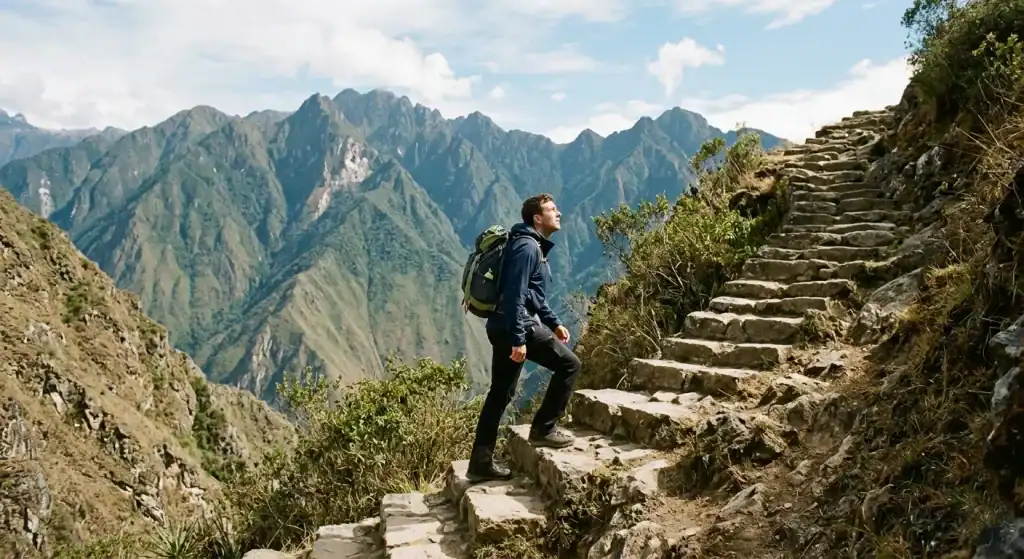
- Day 1: Cusco to Wayllabamba (The Warm-up): The journey begins at Kilometer 82. The first day is relatively gentle, guiding you along the Urubamba River through a dry cactus forest. You will pass your first archaeological sites, Patallacta and Willkarakay, before a steady uphill climb to the village of Wayllabamba.
- Day 2: Wayllabamba to Pacaymayo (The Ultimate Challenge): This is the toughest day of the trek. You will climb steeply through the Llullucha valley into the mystical cloud forest. The final push takes you to the summit of Warmiwañusqa, also known as Dead Woman’s Pass (4,215m). After conquering the pass and enjoying the view, you will descend thousands of Inca steps into the Pacaymayo valley to camp.
- Day 3: Pacaymayo to Wiñay Wayna (The Most Beautiful Day): You will cross the second mountain pass, Runkurakay (3,950m), and explore its semi-circular ruins. The trail then winds through lush tunnels of vegetation and high-jungle scenery. You will explore Sayacmarca and Phuyupatamarca (“The Town in the Clouds”) before reaching the spectacular terraced ruins of Wiñay Wayna.
- Day 4: Wiñay Wayna to Machu Picchu (The Grand Finale): Wake up early to hike the final stretch toward the Sun Gate (Intipunku). As the morning mist clears, you will catch your very first, unforgettable panoramic view of Machu Picchu. From there, you descend into the citadel for your official guided tour.
Physical Preparation & Training Tips
Do not underestimate the physical demands of this trek. The combination of steep inclines and stone steps can be brutal on your knees and quadriceps.
- Cardio training: Focus on stair-climbers, swimming, or running at least two months before your trip.
- Leg strength: Incorporate squats, lunges, and calf raises into your gym routine.
- Break in your boots: Never wear brand-new hiking boots on the Inca Trail. Ensure you have hiked at least 50 kilometers in them prior to arriving in Peru to avoid painful blisters.
2. The Salkantay Trek: The Best 5 Day Hike to Machu Picchu
If you want a diverse mix of snow-capped Andean peaks and lush, tropical high jungle, Salkantay is the perfect alternative to the traditional Inca Trail. A 5 day hike to machu picchu via Salkantay challenges your physical endurance but rewards you with unparalleled natural beauty. This trek is ideal for nature lovers who want to see alpine landscapes transform into dense rainforests in a matter of hours.
- Total Distance: 74 kilometers (46 miles) of rugged mountain terrain.
- Highest Elevation: 4,630 meters (15,190 feet) at the Salkantay Pass.
- Difficulty Level: Challenging due to high altitude and steep alpine descents.
- Key Booking Tip: Unlike the Inca Trail, you don’t need highly restrictive government permits for Salkantay. However, booking your machu picchu hiking tours early ensures you get quality mountain lodges or glass domes to sleep under the stars.
Day-by-Day Route Breakdown
- Day 1: Cusco to Mollepata and Soraypampa (Humantay Lake): The adventure starts with a scenic drive to Mollepata before hiking up to the base camp at Soraypampa. In the afternoon, you will tackle the steep, 1.5-hour climb to the famous Humantay Lake. The turquoise water framed by the massive glacier is a sight you will never forget.
- Day 2: Soraypampa to Chaullay (The Salkantay Pass): This is the longest and hardest day of the entire trek. You will climb slowly toward the Salkantay Pass (4,630m), where you will stand face-to-face with the massive, snow-capped Mt. Salkantay. After celebrating at the top, you will begin a long, technical knee-burning descent into the cloud forest to reach the campsite at Chaullay.
- Day 3: Chaullay to La Playa or Lucmabaco (The Tropical Jungle): Today the cold alpine weather disappears. You will walk through a warm, humid jungle valley alongside the Santa Teresa River. Along the way, you will pass local family farms growing passion fruit, avocados, and organic coffee. You can finish the afternoon relaxing at the natural volcanic hot springs of Cocalmayo.
- Day 4: Lucmabamba to Aguas Calientes (Llactapata Views): You will hike up an original section of the Inca Trail to the hidden ruins of Llactapata. From this unique vantage point, you will catch a rare, distant view of Machu Picchu across the valley. Then, you descend to the Hydroelectric station and walk along the lush train tracks to Aguas Calientes town.
- Day 5: The Ultimate Goal (Exploring Machu Picchu): Wake up at dawn to take the bus up to the archaeological park. You will enter the ancient citadel with your certified guide to explore the main temples, agricultural terraces, and iconic viewpoints during a complete 2-hour tour.
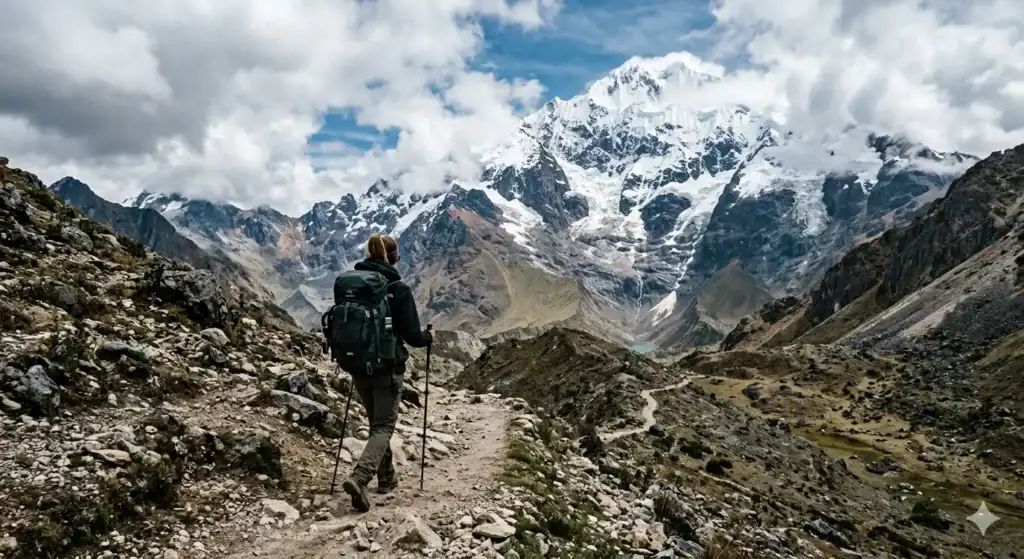
Altitude & Cold Weather Preparation
Because Salkantay is higher and colder than the classic Inca Trail, your packing list must be a bit more strategic.
- Sleep warm: Camp temperatures on night 1 and night 2 regularly drop below freezing (0°C / 32°F). Make sure your tour agency provides a sub-zero sleeping bag or rent one in Cusco.
- Trekking poles are mandatory: The gravel descent on Day 2 from the pass to the jungle is extremely steep and slippery. Heavy-duty trekking poles are essential to protect your joints and maintain balance.
3. Cachora and Choquequirao: Off the Beaten Path Adventures
For true adventurers looking to avoid the mass crowds of modern tourism, exploring the trails around Cachora and the Choquequirao citadel is the ultimate alternative. Choquequirao is widely known as the “sister city” of Machu Picchu but receives only a tiny fraction of the visitors because it cannot be reached by train or bus. It can only be conquered by an intense multi-day trek that tests your mental and physical limits.
- Total Distance: 64 kilometers (40 miles) out-and-back trail.
- Highest Elevation: 3,100 meters (10,170 feet) at the Choquequirao citadel.
- Difficulty Level: Very Strenuous due to steep switchbacks and extreme heat.
- Key Booking Tip: While you do not need to book government permits months in advance like the Inca Trail, going with an experienced guide is highly recommended to navigate the remote mountain passes safely.
Day-by-Day Route Breakdown
- Day 1: Cusco to Cachora, Capuliyoc, and Chiquisca: The journey begins with an early morning drive from Cusco to the village of Cachora, the official gateway to the canyon. From the Capuliyoc lookout, you will catch your first jaw-dropping view of the Apurímac Canyon. You will then begin a steep, grueling descent down zigzagging paths into the canyon to reach the campsite at Chiquisca.
- Day 2: Chiquisca to Marampata and Choquequirao: This is the most demanding day of the trek. You will descend further to Playa Rosalina to cross the Apurímac River. From there, you face a relentless uphill climb of over 1,500 vertical meters through the sun-baked canyon wall. You will pass through scenic landscapes and the quiet community of Marampata before arriving at the spectacular terraces of Choquequirao.
- Day 3: Exploring the Lost Citadel of Choquequirao: You will spend the entire day exploring the sprawling ruins. Because there are no crowds, you can wander through the ancient plazas, the unique llama terraces, and the priests’ quarters completely in peace.
- Day 4: Choquequirao to Chiquisca (The Return Climb): You will pack up your camp and say goodbye to the citadel, retracing your steps back down to the bottom of the deep canyon. You will cross the river once more and tackle the steep uphill climb back to Chiquisca.
- Day 5: Chiquisca to Capuliyoc and Cusco: The final morning involves a steady, uphill hike back to the Capuliyoc viewpoint under the morning sun. After a celebratory lunch with your team, your private transport will drive you back to your hotel in Cusco.
What Makes the Choquequirao Route Unique?
- Solitude and Untouched History: Unlike Machu Picchu, which sees thousands of tourists daily, Choquequirao often hosts fewer than 30 hikers a day. You will have a massive Inca city virtually to yourself.
- The Apurímac Canyon Challenge: The climate inside the canyon is hot and dry during the day, with dense swarms of biting gnats. Packing a high-DEET insect repellent, sun protection, and a lightweight hydration bladder is non-negotiable for this route.